SPEKTRA™
Selective filtering built into the lens improves separation between similar colours. It helps you read terrain details and works alongside the lens's other functions.
Every technical decision has a reason.
What you read here is what you wear.
SPEKTRA™ acts on the light passing through the lens. Its selective filtering improves separation between similar colours, bringing out terrain details instead of simply darkening the whole scene.
On the road or trail, surface changes, shadows and vegetation become easier to distinguish. Contrast helps you read what lies ahead.
Tint and contrast serve different purposes. Tint controls how much visible light reaches your eyes. SPEKTRA™ helps distinguish colours and details.
Each lens colour offers a different view of the terrain. The lens guide lets you compare these views and choose for your activity and the conditions in which you ride, run or ski.


Illustrative contrast comparison. Actual lens views are shown in the lens guide.


Slide to see the lens adapt.
An outing rarely takes place in just one kind of light. PHASE™ adjusts the lens tint automatically: it darkens under UV exposure, then clears as that exposure decreases.
The photochromic molecules react to this exposure. The change is gradual and requires no action from you. Keep the same lens as you move from overcast skies into more exposed areas.
With SPEKTRA PHASE™, photochromic technology and contrast work together: the tint adapts while selective filtering helps you distinguish terrain details. BRUME is offered with PHASE™; the coloured versions combine both technologies.
The slider shows the clear and dark states of the same lens. Choose a colour, then slide to compare its appearance. Each lens guide provides its transmission range and recommended conditions.
VLT is the percentage of visible light that passes through the lens. The lower the percentage, the darker the lens. A higher VLT lets more light through. With photochromic lenses, this value changes between the clear and dark states.
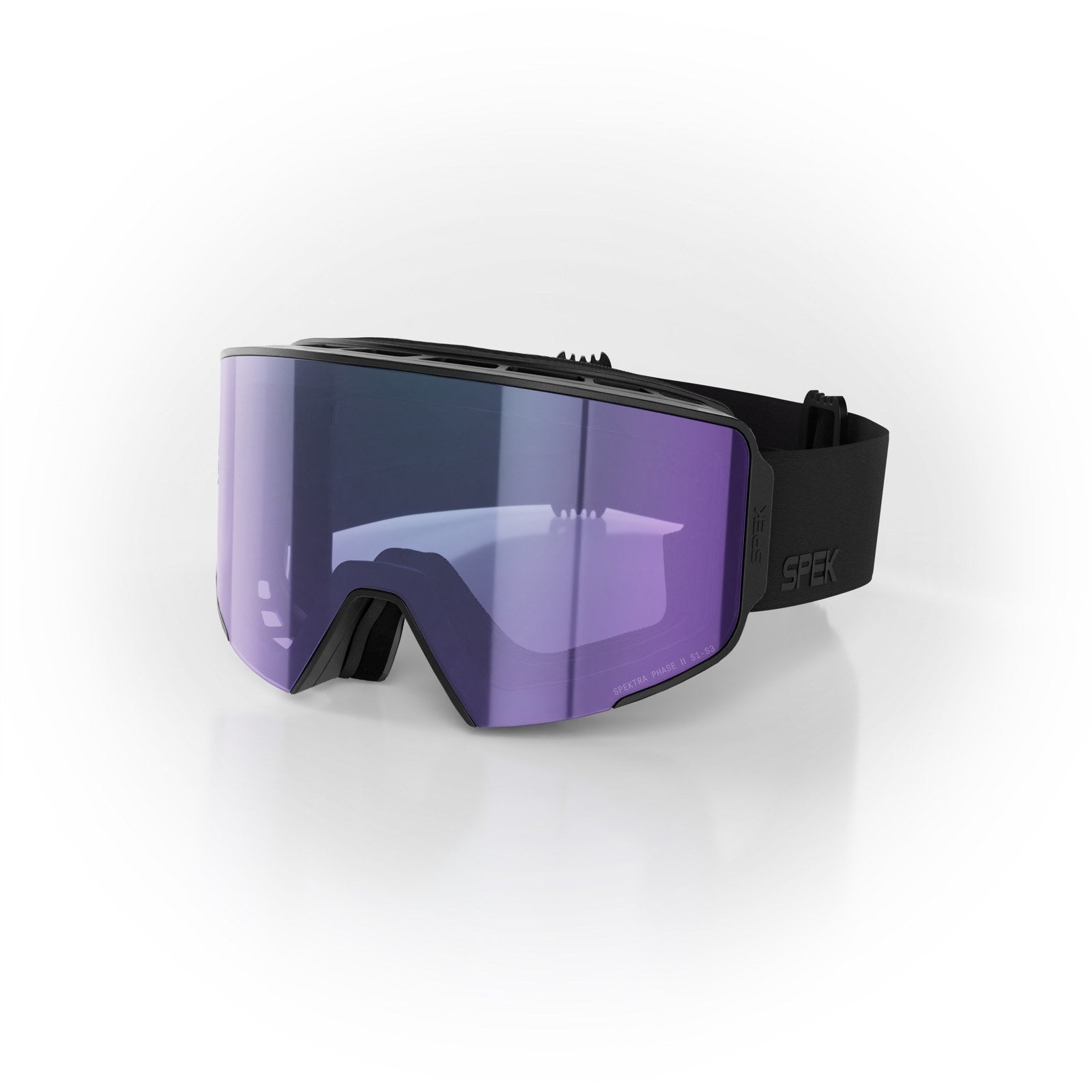
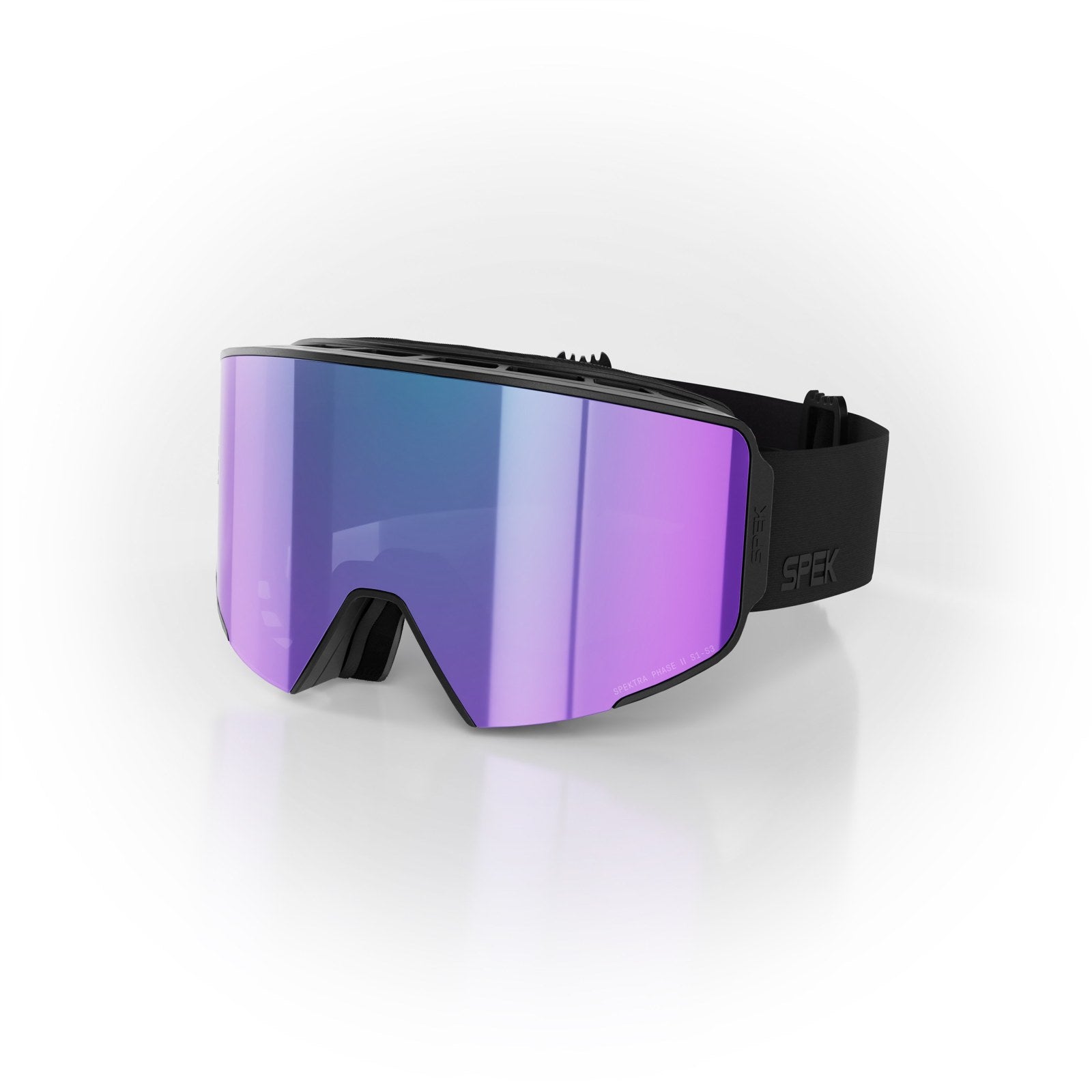
Slide to see the lens adapt.
SCOPE · DUSK · ROSE TO SMOKE
SPEK is the first brand in the world to offer this technology in a ski goggle. With SPEKTRA PHASE II™, the SCOPE DUSK lens combines photochromic adaptation triggered by visible light with SPEKTRA high contrast.
PHASE™ reacts to UV rays. PHASE II™ uses visible light to change tint: the lens responds to ambient light and gradually shifts from a rose base to a smoke tint.
Adaptation and contrast serve complementary roles. The tint change controls the visible light passing through the lens. SPEKTRA filtering improves colour separation to help you read terrain details.
In our range, this technology is available on DUSK. The slider shows both states of the same lens on SCOPE.
DISCOVER SCOPE DUSK
CRS MAG uses magnets to hold the lens to the frame, letting you change lenses in seconds.
Remove the lens, then bring the next one close to the frame. The magnets guide it into alignment and hold it in place.
Switch from a bright-sun lens to a low-light lens as clouds roll in or daylight fades. Adapt your view to the conditions while keeping the same frame.
EXPLORE SKI GOGGLES
PROTECTION · CARE · DURABILITY
Selective filtering built into the lens improves separation between similar colours. It helps you read terrain details and works alongside the lens's other functions.
The treatment on the inner surface reduces unwanted reflections that can reach your eyes. It limits visual distractions caused by light reflected from behind the lens.
A hard coating helps protect the surface from everyday microabrasions. It preserves surface quality without making the lens impossible to scratch. Gentle cleaning remains essential.
The hydrophobic surface makes water bead up; the oleophobic treatment makes oily marks and fingerprints easier to remove. Together, they simplify cleaning and help keep your view clear.
Impact resistance is built into the lens. It comes from the material and its structure, complementing the surface treatments that protect optical quality in everyday use.
UV400 protection filters ultraviolet rays up to 400 nanometres. It targets UV, a part of light that is invisible to the eye, and is separate from how dark the lens is.
A darker lens lets less visible light through. Tint alone does not determine UV protection.
SPEK lenses offer UV400 protection whether clear or dark. Photochromic adaptation changes visible light transmission without removing that protection.
To choose for the conditions, look at VLT and the view through the lens. For UV protection, look for UV400.
Compare categories, visible light transmission and lens views. Each product page includes a guide for that model and views through its lenses.
Explore the guide
